Louisiana Governor signs one of the country’s cruelest anti-homeless laws
Louisiana Governor signs one of the country’s cruelest anti-homeless laws
(WASHINGTON, D.C. – June 15th, 2026)Last week, Louisiana Gov. Jeff Landry signed one of the cruelest, most extreme anti-homeless bills anywhere in the country. This bill will make it a crime to sleep outside in Louisiana, punishing homeless people with harsh fines and jail sentences, while simultaneously setting the stage for forced treatment and forced labor. HB 211 – which harkens back to Louisiana’s dark history of prison labor, convict leasing, and Jim Crow – will clog up our courts, cost our communities, and make it even harder for people to get off the streets and into stable housing. Despite what supporters may claim, this will do nothing to fund the housing and mental health services that actually solve homelessness.
We know this is part of a broader push to criminalize homelessness across the country, led by the billionaire-backed Cicero Institute. The first bill of its kind to include unpaid labor, HB 211 is an extreme take on an already extreme template. With key supporters citing the federal government’s attacks on homeless people as the reason to pursue this bill, it is clear they are more interested in aligning with an ideological agenda than they are in lowering the cost of housing and helping everyday Louisianians get by.
We are proud of the coalition of advocates, service providers, faith leaders, and directly impacted individuals who came together to fight against this bill, and of our community members across the state who sent hundreds of powerful messages in opposition. We will continue our advocacy for a Louisiana where everybody has the housing and support they need to thrive.
It’s clear that we’re seeing a coordinated effort to arrest and jail people because they can’t afford the rent. In Louisiana and across the country, this effort has been led by the Cicero Institute. Louisiana’s law takes this already extreme approach even further, including forced labor for homeless people. At the same time, Louisiana’s Governor is citing Donald Trump’s anti-homeless policies to justify his support for this heinous bill. Instead of pushing people into jails, forced treatment facilities, and unpaid labor, our politicians should focus on ensuring everyone has the housing they can afford and the healthcare they need.
See below for quotes from our partner organizations in Louisiana.
“We could reduce homelessness more effectively if the money that 211 proposes to spend on criminalizing were spent instead on creating a program of emergency rent assistance for Louisianians who can’t afford sky-high rents and a program of more robust services to help people struggling with mental illness and substance use disorders,” said Chan Crawford, Vice President of Government Communications and Policy at UNITY of Greater New Orleans.
“At a time when many in Louisiana are one financial misfortune away from being pushed into homelessness, and people have to make difficult choices between keeping the lights on and buying groceries, the legislature’s move to criminalize homelessness builds on a long legacy of failed housing policies and management of the symptoms rather than getting to the root of the problem,” said Ameca Reali, Executive Director of the Louisiana Fair Housing Action Center. “Instead of investing our resources into proven solutions to homelessness like affordable, healthy, and safe housing, House Bill 211 targets people for merely existing and prevents them from obtaining future housing opportunities by subjecting them to incarceration, criminalization, and discrimination, all the while getting us no closer to a long-term solution. Louisianans deserve transformative, life-affirming solutions to the housing crisis, not more of the same”
“At the same time the Louisiana legislature is on the verge of providing millions of dollars in tax breaks incentives to the world’s richest man to build a giant rocket launcher, HB 211 is on the cusp of being passed without any dedicated funding attached to it to deal with the upstream problems that lead to homelessness, like a lack of affordable housing and other cost-of-living issues, or the downstream outcomes the bill author says she wants to address, like family reunification, substance abuse treatment, and re-housing,” said Peter Robins-Brown, Executive Director of Louisiana Progress.
“HB 211 will disproportionately harm individuals at the intersection of disability and homelessness,” said Melanie Bray, Director of Legal Programs and Advocacy at Disability Rights Louisiana. “A significant number of people experiencing homelessness are living with disabilities—physical disabilities, psychiatric disabilities, developmental disabilities, traumatic brain injuries, chronic illness. Systemic failures create and continue homelessness, particularly for people with disabilities. In Louisiana, we don’t have enough affordable housing, we don’t have enough programs to offset the disparity between earned wages and housing, and there aren’t enough community-based services for people with disabilities. Rather than change the systems that perpetuate homelessness for people with disabilities, Louisiana has chosen to criminalize people and add more barriers to accessing the housing and support they need.”
“HB 211 is a step backward, pushing us further from real solutions and toward policies that harm our most vulnerable neighbors,” said Chandra Shae Foster, Louisiana State Policy Director, Southern Poverty Law Center. “Criminalizing homelessness will not address its root causes; it will only deepen them, making it harder for people to access housing, employment, and stability. Louisiana needs investments in support and opportunity, not punishment for people trying to survive.”
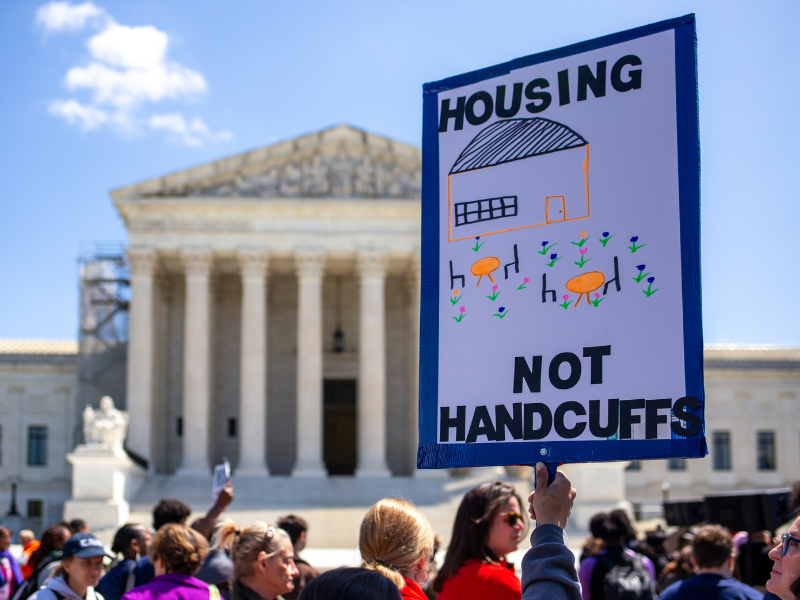
“Everyone needs a safe place to sleep at night. But in our region, and in most of Louisiana, there are simply not enough shelter beds for the number of unhoused people who need them.” said Corey Bordelon, Executive Director of the Northlake Homeless Coalition. “As HB 211 moves toward implementation, we urge local leaders, service providers, and community members to reject punitive approaches and instead come together to expand mental health services, shelter, and affordable housing options so that no one is met with handcuffs for lacking a place to sleep. Our state can choose dignity, safety, and solutions that work.”
“Instead of investing in resources to help Louisianans, our legislature is taking aim at the state’s most vulnerable people,” said Alanah Odoms, Executive Director of the ACLU of Louisiana. “Let’s be clear: criminalizing homelessness will do nothing to address the realities unhoused people face. It will only further clog our courts while saddling people on the streets with fees, jail time, and forced labor. We believe that legislation that undermines due process and penalizes individuals with criminal records will further distance them from necessary employment and housing opportunities. There should be an investment in prevention and diversion, not criminalization of sleeping outside.”
“From a service delivery perspective, policies like HB 211 make our work more challenging to connect with people and move them into stable housing,” said Elsa Dimitriadis, Executive Director of the Acadiana Regional Coalition on Homelessness and Housing. “Outreach depends on trust and maintaining contact, and when people fear increased legal consequences, they are less likely to engage with outreach teams or share accurate information about where they are. At the same time, criminalization creates additional barriers to housing, as citations, warrants, or jail time can disrupt documentation, employment, and service eligibility. We all want to see fewer people living outside, and our focus remains on working with partners to ensure people can access the housing and services they need.”
“HB 211 represents a misguided and punitive response to the urgent issue of housing instability in Louisiana,” said Andreanecia M. Morris, President of HousingLOUISIANA. “Instead of channeling resources into safe, affordable housing and the comprehensive wraparound services that empower individuals to stay housed, this bill threatens to divert support toward criminalizing people who are experiencing homelessness. We should be investing in proven solutions that address the systemic causes of this crisis. Criminalizing homelessness only perpetuates suffering and fails to provide the housing our communities truly need: guaranteed housing for all.”
“Homelessness is the result of barriers to accessing and keeping housing,” said Sarah Johnson, Executive Director of the Northeast Louisiana HOME Coalition. “Services are tools to help someone overcome barriers to housing. Adding an arrest to someone’s record simply adds another barrier to their being housed. HB 211 does not take any steps to create new or increase existing services. Thus, HB 211 will increase homelessness, not decrease it.”
“The approach characterized by HB 211 confuses the issue of homelessness, whether from naivete or self-interest,” said Joe Heeren-Mueller, Coordinator with the Louisiana Advocacy Coalition on Homelessness. “It misunderstands the fundamental cause of homelessness – housing unaffordability. Instead, it conflates the individual vulnerabilities of unhoused people – poverty, domestic violence, age, health, etc. – with the reason that homelessness persists within our society. Homelessness continues to affect Louisianians because housing costs have soared while wages have stagnated. Failure to address systemic economic inequality ensures that people will continue to fall out of housing. Individual vulnerabilities tell us who becomes homeless and what sort of interventions can help them return to stability; they don’t answer the question: ‘why?’. HB 211 is doomed to fail Louisiana because it ignores the fundamental problem and fails to envision a framework to return people who have become unhoused to stable housing while at the same time introducing new barriers for those who already face a stacked deck.”
###
About the National Homelessness Law Center
The National Homelessness Law Center is committed to protecting the rights of unhoused people across the United States and to advocating for policies that prevent and end homelessness, ensuring that all people have access to safe and adequate housing.