Two years since the Grants Pass ruling, 350+ cities, 14 states, and the Trump administration have criminalized homelessness
Two years since the Grants Pass ruling, 350+ cities, 14 states, and the Trump administration have criminalized homelessness
(Washington, D.C. – June 26th, 2026)
On June 28th, 2024, the Supreme Court issued its decision in the most impactful case on homelessness in decades. In Johnson v. Grants Pass, the court ruled that cities and states could arrest, fine, and jail homeless people sleeping outside, even when they have nowhere else to go. This catastrophic decision lit a match under an already burning fire. In the two years since, we’ve seen a rapid expansion of harmful anti-homeless laws and a retreat away from real solutions to homelessness, like housing and support, at the local, state, and national level.
Since the court’s ruling came down, over 350 cities and 14 states have passed laws and measures making it a crime to be homeless, including a new Louisiana law that opens the door for cities to push homeless people into treatment and unpaid labor against their will. In a short time, these new laws have already exposed homeless people to increased police harassment, arrests and incarceration, and death while sleeping outside. These new laws have exposed homeless people to increased police harassment, arrests and incarceration, and death while sleeping outside. In Grants Pass, Oregon, homeless people are forced into fenced-off camps under threat of arrest, then excluded for arbitrary violations. In Louisville, Kentucky, a homeless woman was cited and harassed by police for sleeping outside while she was in active labor. In Miami Beach, Florida, nearly half of all arrests made were for sleeping outside. And in Atlanta, Georgia, Cornelius Taylor died after getting crushed by a bulldozer in an encampment eviction. These devastating impacts are the predictable outcome of policies that prioritize punishment over human life. None of this has gotten us any closer to solving homelessness; it has only made homelessness worse.
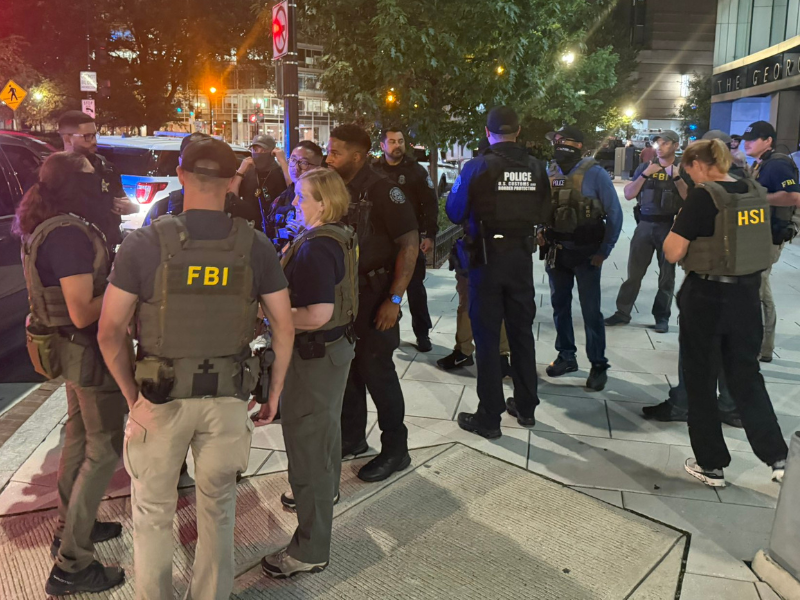
This anniversary comes at an especially scary time for those doing the important work to solve homelessness. Just weeks ago, the Trump administration released its extreme and unlawful rewriting of homelessness funding priorities. In these new guidelines, the Trump administration explicitly cited Grants Pass to justify incentivizing communities to make it a crime to be homeless to receive critical funding. While the Law Center and our partners are challenging this funding scheme in court, the administration’s attacks risks forcing at least 97,000 people back into homelessness. These funding changes would also force communities to comply with the Trump administration’s anti-immigrant, anti-LGBTQ+, and pro-criminalization agenda to be able to receive these life-saving funds.
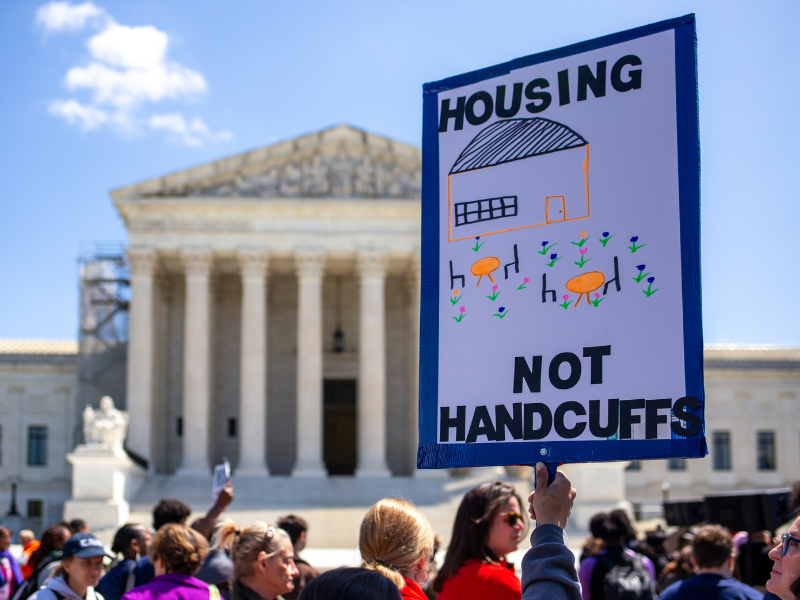
But even in the face of these horrific setbacks, we’ve built a movement to defend the rights of our homeless neighbors. While the Supreme Court heard Johnson v. Grants Pass, we held a rally of hundreds outside the Supreme Court, collected dozens of amicus briefs, and elevated a national conversation about the harms of criminalizing homelessness. Now, despite being up against literal billionaires, advocates in cities and states across the country are continuing to fight back against criminalization and win decisive victories. This includes defeating a proposed camping ban in East Lansing, Michigan, getting a statewide camping ban ruled unconstitutional in Kentucky, and defeating six different criminalization bills in one legislative session in Wisconsin. Two years later, we are proud to continue our work to build a movement for a country where everyone – regardless of where they live, who they live, or what they look like – has the housing and support they want and need to thrive.
###
About the National Homelessness Law Center
The National Homelessness Law Center is committed to protecting the rights of unhoused people across the United States and to advocating for policies that prevent and end homelessness, ensuring that all people have access to safe and adequate housing.